For the global elite, high-end travel has historically been defined by exclusivity, frictionless service, and material opulence. A five-star suite overlooking a capital skyline, private transfers waiting on the tarmac, and Michelin-starred dining were the ultimate currencies of a well-spent vacation.
However, the architecture of high-end travel is undergoing a profound transformation. According to the World Economic Forum’s (WEF) Travel & Tourism Development Index (TTDI), luxury tourism is no longer just about buying your way past the velvet rope. With global travel conditions maturing, structural shifts in infrastructure, a 9.6% surge in cultural assets, and growing friction around mass tourism, the definition of high-end luxury is shifting from what you can buy to how deeply you can connect and escape.
For discerning travelers, private wealth managers, and luxury hospitality curators, decoding these macro-trends reveals what it truly means to travel at the highest level today.
1. The Death of Mass-Market Luxury: The Rise of “Smart Spreading”
One of the defining paradoxes of the modern travel boom is that traditional hotspots are buckling under overtourism. From historic European capitals to famous coastal islands, crowding has compromised the tranquility that high-end travelers demand.
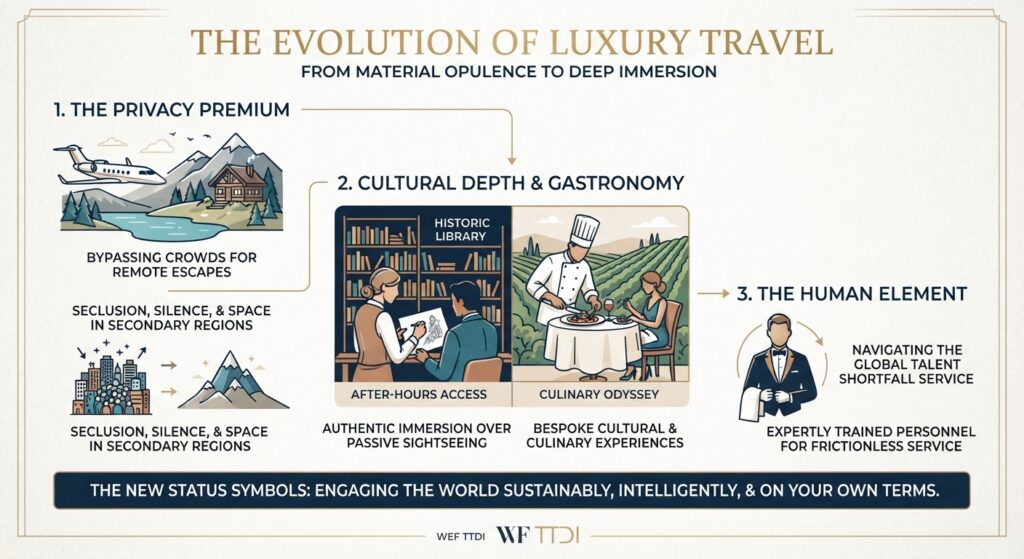
- The Privacy Premium: True luxury today is defined by space, silence, and scarcity. High-net-worth travelers are increasingly bypassing hyper-touristed primary hubs in favor of secondary and tertiary regions supported by improving global infrastructure.
- Seamless Access to the Untouched: Thanks to massive investments in air transport and regional connectivity highlighted in the TTDI report, ultra-luxury travelers can seamlessly access remote experiential escapes—from secluded alpine hideaways to private nature reserves—without sacrificing comfort or safety.
2. Cultural Depth and Gastronomy as the New Status Symbols
Material luxury is easily replicable; authentic cultural access is not. The TTDI data highlights a massive global surge in cultural resources and an explosion in experiential gastronomy.
- Curated Intangible Heritage: Today’s luxury traveler is moving away from passive sightseeing toward intellectual and cultural immersion. This means private, after-hours viewings of world heritage sites, masterclasses with generational artisans, and bespoke historical itineraries crafted by leading cultural foundations.
- The Culinary Odyssey: With the global gastronomy market scaling unprecedented heights, fine dining has evolved from formal tasting menus into a narrative journey. High-end travelers view food as a gateway to local identity, prioritizing farm-to-table traceability, private chef pairings, and rare culinary traditions that money alone cannot buy elsewhere.
3. The Human Element: Navigating the Global Talent Squeeze
While luxury properties can invest heavily in sleek design, private pools, and high-tech amenities, the invisible backbone of any high-end experience remains human service.
- The Cost of the 43-Million-Worker Shortfall: As the TTDI data warns, the global tourism sector faces a looming workforce and skills deficit. For the luxury sector, this creates a critical vulnerability. True five-star hospitality relies on hyper-attentive, intuitive, and expertly trained personnel.
- The Boutique Advantage: High-end travelers are noticing the gap between automated tech and human touch. Leading luxury brands are combating this by heavily investing in staff retention, boutique academy training, and bespoke butler services to ensure that service excellence remains uncompromised amid broader industry labor pressures.
What This Means for the Discerning Traveler
If you are planning your next high-end escape, the changing global tourism landscape suggests a new set of rules for luxury travel:
- Prioritize Privacy Over Prestige: Skip the overcrowded bucket-list mega-cities during peak seasons. Look instead toward top-performing infrastructure markets that offer exclusive access to secondary regions.
- Demand Authenticity and Impact: High-end travel should support, not strain, local communities. Seek out properties and operators that integrate sustainability natively, protecting the natural and cultural assets that make a destination worth visiting.
- Leverage Intelligent Curation: With AI search and advanced digital planning tools redefining how itineraries are built, use high-touch human travel architects who can filter through the noise to curate hyper-personalized, frictionless journeys.
Final Thoughts
The 2026 TTDI data makes it clear that the global travel ecosystem is shifting rapidly. For the luxury sector, exclusivity is no longer about isolation from the world—it is about engaging with the world intelligently, sustainably, and on your own terms. True luxury has officially evolved from owning the moment to experiencing it without compromise.