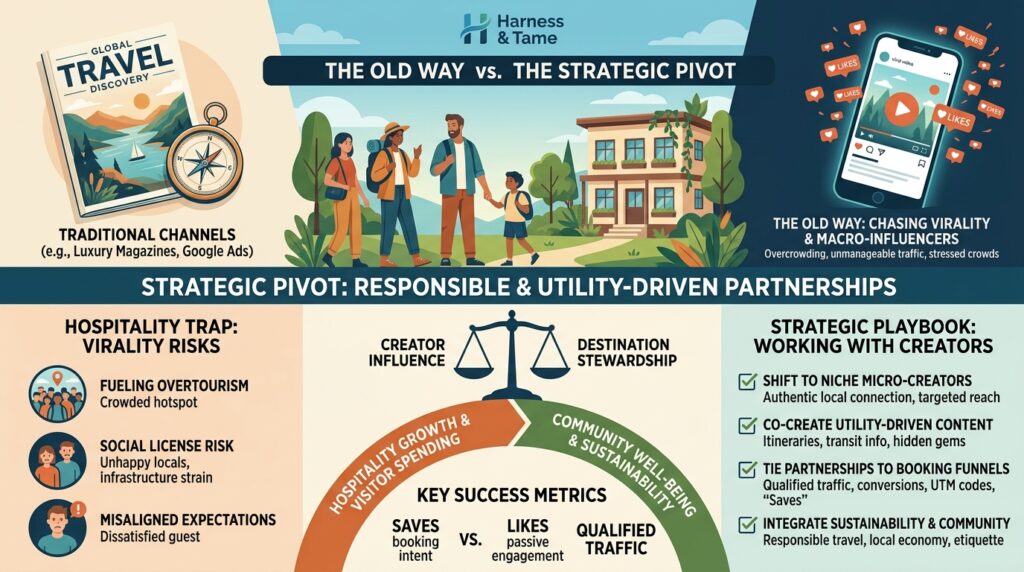
For decades, hospitality marketing followed a predictable, linear path: glossy print spreads in luxury travel magazines, paid-search Google ads, and traditional destination marketing organization (DMO) brochures. Today, that entire paradigm has been upended. Social platforms and independent content creators are no longer supplemental marketing channels—they are the primary engines of global travel discovery, inspiration, and booking intent.
However, as the World Economic Forum’s (WEF) Travel & Tourism Development Index (TTDI) points out, the travel sector is walking a delicate tightrope. While tourism demand and visitor spending have reached record highs—with international tourist arrivals hitting an estimated 1.52 billion—destinations worldwide are grappling with severe concentration risks, overcrowding, and a decline in community well-being.
For boutique hotels, major hospitality brands, and property operators, navigating the modern creator economy requires a strategic pivot: moving away from chasing mindless viral vanity metrics and shifting toward responsible, utility-driven creator partnerships that protect destination health while driving real business results.
1. The Power of Creators: Shifting from Inspiration to Intent
Travelers—particularly Gen-Z and Millennials—no longer rely solely on traditional search engines or static OTAs to plan their trips. They turn to social video platforms, peer recommendations, and creator-led storytelling.
- The Trust Advantage: Consumers often view creators as authentic cultural insiders rather than corporate mouthpieces. Content that highlights behind-the-scenes moments, local recommendations, and honest reviews converts into booking decisions faster than traditional paid banner ads.
- The “Save” Intent vs. Passive Likes: Modern hospitality data shows a clear divide in how content performs. While dreamy, cinematic aesthetic content drives passive engagement (likes and comments), utility-led planning content—such as detailed itineraries, transit directions, and hidden local gems—generates high numbers of “saves,” signaling true booking intent.
2. The Hospitality Trap: When Virality Becomes a Liability
While a viral TikTok or Instagram Reel can fill a hotel’s occupancy calendar overnight, unmanaged creator-driven hype poses significant operational and social risks for hospitality businesses and their host communities.
- Fueling Overtourism: Directing a massive influx of creator-inspired traffic to a single primary hotspot exacerbates local crowding, strains municipal infrastructure, and degrades the guest experience.
- The Social License Risk: As highlighted in the TTDI report, the socio-economic impact of tourism has faced headwinds in maintaining community harmony. When properties partner with creators to market a location without educating travelers on local etiquette, environmental preservation, or seasonal distribution, it triggers local resentment and regulatory crackdowns.
- Misaligned Expectations: Creators sometimes showcase highly curated, frictionless, or exclusive moments that do not reflect reality. When guests arrive expecting an isolated paradise only to find a congested bottleneck, satisfaction plummets, leading to poor review scores and brand erosion.
3. A Strategic Playbook: How Hospitality Businesses Should Work with Creators
To turn the creator economy into an asset for sustainable growth, hospitality operators and marketing executives must modernize their influencer strategies:
A. Shift from Mega-Influencers to Niche Micro-Creators
- Rather than spending budgets on high-reach macro-influencers who drive generalized, unmanageable foot traffic, partner with micro-creators and local experts whose values and specific niches (e.g., slow travel, architectural history, culinary foraging, or off-grid nature) align with your property’s ethos.
B. Co-Create Utility-Driven, Responsible Content
- Move beyond shallow, glossy aesthetic videos. Collaborate with creators to produce practical utility content: How to get to the region via public transit, respectful cultural etiquette, shoulder-season travel guides, and lesser-known regional alternatives (the “travel twin” concept) that divert crowds away from saturated hubs.
C. Tie Partnerships to Attribution and Booking Funnels
- Stop measuring success purely by vanity metrics like likes and follower counts. Forward-thinking hospitality brands track metrics closer to the booking funnel—such as qualified traffic driven via specific UTM parameters, exclusive creator promo codes, and post-campaign conversion spikes.
D. Integrate Sustainability and Community Narratives
- Use creator partnerships to highlight your property’s sustainability initiatives, local sourcing networks, and community employment practices. Show travelers how staying at your property contributes positively to the regional economy rather than extracting value from it.
Final Thoughts
The travel creator economy is an unstoppable force, but its long-term viability depends on maturity. For hospitality businesses, the goal of influencer marketing should no longer be simply driving a temporary spike in arrivals. By aligning creator partnerships with the principles of smart spreading, operational resilience, and community respect, operators can harness digital influence to build a more profitable, balanced, and sustainable future.